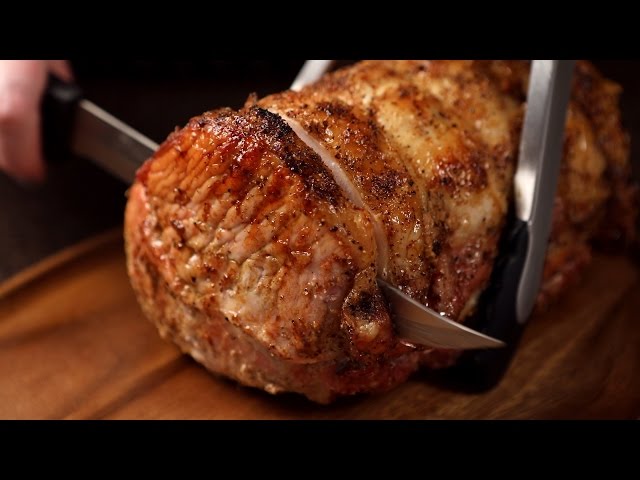
Pork roast cooking time refers back to the length required to prepare dinner a pork roast till it reaches a protected inner temperature and desired stage of doneness. The cooking time can range relying on the scale, minimize, and cooking methodology used. Usually, bigger roasts require longer cooking instances than smaller ones, and cooking strategies equivalent to roasting or braising take longer than grilling or pan-frying.
Figuring out the correct cooking time for pork roast is essential to make sure meals security and obtain the specified tenderness and juiciness. Undercooking can lead to the meat being robust and probably harboring dangerous micro organism, whereas overcooking can result in dryness and lack of taste.
To find out the cooking time, elements equivalent to the burden of the roast, the cooking methodology, and the specified inner temperature ought to be thought of. Utilizing a meat thermometer is really helpful to precisely measure the inner temperature, making certain that the roast is cooked to a protected minimal inner temperature of 145 levels Fahrenheit (63 levels Celsius) as really helpful by the USDA.
Pork Roast Cooking Time
Figuring out the correct cooking time for a pork roast is crucial to make sure meals security and obtain the specified tenderness and juiciness. Varied elements affect the cooking time, and understanding these features helps in perfecting the cooking course of.
- Measurement: Bigger roasts require longer cooking instances than smaller ones.
- Minimize: Totally different cuts of pork roast have various cooking instances attributable to variations in fats content material and muscle density.
- Cooking Technique: Roasting or braising takes longer than grilling or pan-frying.
- Temperature: The specified inner temperature of the roast impacts the cooking time.
- Gear: Utilizing an oven-safe meat thermometer ensures correct temperature measurement.
- Marinade: Marinating the roast can cut back cooking time and improve taste.
- Doneness: Private preferences and cultural elements affect the specified stage of doneness, impacting cooking time.
- Resting: Permitting the roast to relaxation earlier than carving helps redistribute juices, leading to a extra tender and flavorful meat.
- Carryover Cooking: The roast continues to prepare dinner even after being faraway from the warmth supply, so factoring in carryover cooking is necessary to keep away from overcooking.
Understanding these key features and their interconnections allows exact dedication of pork roast cooking time. By contemplating the scale, minimize, cooking methodology, desired temperature, and different elements, cooks can obtain completely cooked pork roasts which might be tender, juicy, and flavorful.
Measurement
The dimensions of a pork roast is a major determinant of its cooking time. Bigger roasts require longer cooking instances to make sure that the inner temperature reaches a protected and fascinating stage all through the meat. It is because warmth takes longer to penetrate the middle of a bigger roast in comparison with a smaller one.
The cooking time for a pork roast is immediately proportional to its measurement. A basic rule of thumb is to permit 20-25 minutes per pound of meat when roasting at 325F (163C). For instance, a 4-pound roast would require roughly 80-100 minutes of cooking time.
Understanding the connection between measurement and cooking time is essential to keep away from undercooking or overcooking the roast. Undercooked pork can harbor dangerous micro organism, whereas overcooked pork turns into dry and difficult. Utilizing a meat thermometer to watch the inner temperature ensures that the roast is cooked to the specified doneness and minimizes the chance of foodborne sickness.
Minimize
The minimize of pork roast considerably influences its cooking time attributable to variations in fats content material and muscle density. Totally different cuts have distinct traits that have an effect on the speed at which they prepare dinner and the tenderness of the ultimate product.
- Fats Content material: Fats acts as an insulator, slowing down the cooking course of. Cuts with larger fats content material, equivalent to pork stomach or pork shoulder, require longer cooking instances to succeed in the specified inner temperature.
- Muscle Density: Cuts with denser muscle fibers, equivalent to pork loin or pork tenderloin, prepare dinner extra rapidly than these with much less dense muscle fibers, equivalent to pork shoulder or pork butt.
Understanding the variations in cooking instances for numerous cuts of pork roast is crucial to attain the specified stage of doneness and tenderness. By deciding on the suitable cooking methodology and adjusting the cooking time primarily based on the minimize, cooks can be sure that their pork roasts are cooked to perfection.
Cooking Technique
The selection of cooking methodology performs a major position in figuring out the cooking time of a pork roast. Roasting and braising are slower cooking strategies in comparison with grilling or pan-frying, attributable to variations in warmth switch and the quantity of moisture concerned.
- Warmth Switch: Roasting and braising contain cooking the meat in an oven or lined pot, respectively. These strategies make the most of oblique warmth, which takes longer to penetrate the meat in comparison with direct warmth utilized in grilling or pan-frying.
- Moisture Retention: Roasting and braising are moist-heat cooking strategies, which means the meat is cooked within the presence of moisture. This moisture helps to tenderize the meat and prevents it from drying out, nevertheless it additionally slows down the cooking course of because the moisture must evaporate earlier than the meat can brown.
Understanding the impression of cooking methodology on cooking time is crucial for reaching the specified doneness and texture of the pork roast. By deciding on the suitable cooking methodology and adjusting the cooking time accordingly, cooks can be sure that their pork roasts are cooked to perfection.
Temperature
The specified inner temperature of a pork roast considerably influences its cooking time because it determines the extent of doneness and ensures meals security. Understanding the connection between temperature and cooking time is essential for reaching the specified outcomes.
- USDA Pointers: The USDA recommends a minimal inner temperature of 145F (63C) for pork roasts to make sure the destruction of dangerous micro organism and forestall foodborne diseases.
- Carryover Cooking: Even after eradicating the roast from the oven, its inner temperature continues to rise attributable to carryover cooking. Subsequently, it is very important take away the roast from the oven just a few levels beneath the specified temperature to account for this.
- Doneness Ranges: The specified stage of doneness, whether or not uncommon, medium, or well-done, immediately impacts the cooking time. For instance, a well-done roast requires an extended cooking time to succeed in the next inner temperature.
- Temperature Monitoring: Utilizing a meat thermometer to watch the inner temperature is crucial to make sure accuracy and forestall undercooking or overcooking. Inserting the thermometer into the thickest a part of the roast gives essentially the most correct studying.
By contemplating the specified inner temperature and using correct temperature monitoring methods, cooks can exactly decide the cooking time for his or her pork roast, making certain that it’s cooked to perfection, protected to devour, and meets their desired stage of doneness.
Gear
Utilizing an oven-safe meat thermometer is a vital facet of figuring out correct pork roast cooking time. It ensures that the inner temperature of the roast is measured exactly, permitting cooks to attain the specified stage of doneness and forestall undercooking or overcooking.
- Accuracy and Precision: Oven-safe meat thermometers present extremely correct and exact temperature readings, making certain that the inner temperature of the roast is measured accurately. This eliminates guesswork and reduces the chance of undercooking or overcooking the meat.
- Secure Cooking: Utilizing a meat thermometer helps be sure that the pork roast reaches a protected inner temperature, eliminating the chance of foodborne diseases brought on by undercooked meat.
- Doneness Desire: Meat thermometers enable cooks to watch the inner temperature of the roast and take away it from the oven when it reaches their desired stage of doneness, whether or not uncommon, medium, or well-done.
- Consistency: Utilizing a meat thermometer promotes constant cooking outcomes, making certain that the pork roast is cooked to the identical stage of doneness each time.
By using an oven-safe meat thermometer, cooks can exactly decide the cooking time for his or her pork roast, making certain that it’s cooked to perfection, protected to devour, and meets their desired stage of doneness. This software performs a significant position in reaching the absolute best outcomes when cooking pork roasts.
Marinade
Marinating a pork roast earlier than cooking gives a number of advantages, together with decreased cooking time and enhanced taste. Understanding the connection between marinating and pork roast cooking time permits cooks to optimize their cooking course of and obtain the absolute best outcomes.
- Tenderization: Marinades include enzymes that break down the proteins within the meat, making it extra tender and juicy. This tenderization course of can cut back the cooking time required to attain the specified stage of doneness.
- Taste Penetration: Marinating permits the flavors from the marinade to penetrate the meat, leading to a extra flavorful and sophisticated style. The longer the meat is marinated, the deeper the flavors will penetrate.
- Moisture Retention: Marinades typically include acidic substances, equivalent to vinegar or lemon juice, which assist to retain moisture within the meat throughout cooking. This moisture retention prevents the roast from drying out, even when cooked for an prolonged interval.
- Diminished Cooking Time: The mixture of tenderization and moisture retention supplied by marinating permits the roast to prepare dinner extra rapidly and evenly. The enzymes within the marinade break down the connective tissues, making the meat extra receptive to warmth, whereas the moisture helps to forestall overcooking.
By understanding the connection between marinating and pork roast cooking time, cooks can successfully cut back cooking time whereas enhancing the flavour and tenderness of their roasts. Experimenting with totally different marinades and marinating instances permits for personalisation and the invention of non-public preferences.
Doneness
The specified stage of doneness for a pork roast will not be solely decided by goal elements like temperature and cooking methodology, but in addition by private preferences and cultural influences. Understanding this connection gives a extra nuanced perspective on pork roast cooking time.
- Cultural Norms: Totally different cultures have various preferences for the doneness of pork roasts. In some cultures, well-done roasts are most well-liked for security causes, whereas in others, medium-rare roasts are thought of extra flavorful and tender.
- Private Style: Particular person preferences additionally play a major position. Some folks desire the juicy and tender texture of a medium-rare roast, whereas others benefit from the firmer texture of a well-done roast.
- Regional Variations: Regional variations inside a tradition can even affect doneness preferences. For instance, within the southern United States, pulled pork is a well-liked dish that requires an extended cooking time to attain a young and flavorful end result.
- Security Concerns: Whereas private preferences are necessary, it’s essential to do not forget that undercooked pork can pose well being dangers. The USDA recommends cooking pork to an inner temperature of 145F (63C) to make sure security.
By contemplating the interaction between doneness preferences, cultural elements, and security pointers, people could make knowledgeable choices concerning the cooking time required to attain their desired stage of doneness for a pork roast.
Resting
Resting a pork roast earlier than carving is a vital step that enhances its tenderness and taste. This apply permits the juices to redistribute all through the meat, leading to a extra evenly cooked and succulent roast.
- Muscle Rest: When a pork roast is cooked, the muscular tissues contract and tighten, squeezing out the juices. Resting permits the muscular tissues to chill out and reabsorb these juices, leading to a extra tender and flavorful roast.
- Juice Redistribution: Throughout cooking, the juices within the middle of the roast are hotter than these close to the perimeters. Resting permits time for the warmth to distribute evenly all through the roast, making certain that the juices are evenly dispersed.
- Taste Enhancement: The resting course of permits the flavors to meld and develop, leading to a extra complicated and satisfying style expertise.
- Diminished Carving Loss: Resting helps the juices settle again into the meat, decreasing the quantity of juices misplaced throughout carving, leading to a extra flavorful and moist roast.
The resting time for a pork roast varies relying on its measurement and the specified stage of doneness. As a basic rule, a 15-minute resting interval is ample for many pork roasts. Nonetheless, bigger roasts or these cooked to a decrease inner temperature could require an extended resting time.
Carryover Cooking
Relating to cooking a pork roast, understanding the idea of carryover cooking is essential to reaching the right doneness. Carryover cooking refers back to the phenomenon the place the inner temperature of the roast continues to rise even after it has been faraway from the warmth supply. That is because of the residual warmth throughout the roast, which continues to prepare dinner the meat.
- Inner Temperature: The inner temperature of the roast will proceed to rise by 5-10 levels Fahrenheit in the course of the resting interval. Subsequently, it is very important take away the roast from the oven or grill just a few levels beneath the specified last temperature to account for carryover cooking.
- Measurement of the Roast: Bigger roasts have a better mass and thus retain warmth extra successfully, leading to extra carryover cooking. Smaller roasts, then again, quiet down extra rapidly.
- Cooking Technique: Roasting and braising contain cooking the meat at a decrease temperature for an prolonged interval, which permits for extra carryover cooking in comparison with strategies like grilling or pan-frying.
- Resting Time: The resting time after cooking additionally impacts carryover cooking. An extended resting interval permits for extra warmth to dissipate, leading to much less carryover cooking.
By understanding and factoring in carryover cooking, you may be sure that your pork roast reaches the specified stage of doneness with out overcooking and drying out. It’s a easy but efficient approach that may considerably enhance the standard of your roasted pork.
Pork Roast Cooking Time FAQs
This part addresses generally requested questions and misconceptions concerning pork roast cooking time, offering clear and informative solutions to reinforce your understanding.
Query 1: How do I decide the cooking time for my pork roast?
The cooking time for a pork roast depends upon its measurement, minimize, and cooking methodology. A basic rule of thumb is to permit 20-25 minutes per pound of meat when roasting at 325F (163C). Nonetheless, utilizing a meat thermometer to measure the inner temperature is essentially the most correct method to make sure the roast is cooked to your required doneness.
Query 2: What’s the really helpful inner temperature for a pork roast?
The USDA recommends cooking pork roasts to a minimal inner temperature of 145F (63C) to make sure meals security. This temperature helps to destroy dangerous micro organism whereas sustaining the juiciness and tenderness of the meat.
Query 3: Ought to I cowl my pork roast whereas cooking?
Overlaying a pork roast whereas cooking may help to create a moist surroundings, leading to a extra tender and juicy roast. Nonetheless, it is very important uncover the roast for the final 30-60 minutes of cooking to permit the pores and skin to crisp up.
Query 4: Can I prepare dinner a pork roast from frozen?
Sure, you may prepare dinner a pork roast from frozen, however it’s going to take roughly 50% longer than cooking a thawed roast. You will need to be sure that the roast is cooked to the really helpful inner temperature of 145F (63C).
Query 5: What’s the easiest way to relaxation a pork roast?
After cooking, let the pork roast relaxation for 15-20 minutes earlier than carving. This permits the juices to redistribute all through the meat, leading to a extra tender and flavorful roast.
Query 6: How can I stop my pork roast from drying out?
To forestall a pork roast from drying out, be certain that to prepare dinner it to the correct inner temperature, cowl it whereas cooking, and let it relaxation earlier than carving. Moreover, utilizing a brining answer or marinating the roast may help so as to add moisture and taste.
Abstract:Understanding pork roast cooking time is crucial for reaching a superbly cooked, juicy, and flavorful roast. By following the rules and addressing frequent questions, you may be sure that your pork roasts end up scrumptious each time.
Transition:Now that we have now explored the intricacies of pork roast cooking time, let’s delve into some extra ideas and methods to reinforce your pork roasting expertise.
Pork Roast Cooking Time Suggestions
Mastering the artwork of pork roast cooking time requires consideration to element and some key methods. Listed below are some ideas that can assist you obtain completely cooked pork roasts each time:
Tip 1: Use a meat thermometer.
Essentially the most correct technique to decide the doneness of a pork roast is to make use of a meat thermometer. Insert the thermometer into the thickest a part of the roast, avoiding any bones. The inner temperature ought to attain 145F (63C) for meals security and optimum tenderness.
Tip 2: Let the roast relaxation.
After eradicating the roast from the oven, let it relaxation for 15-20 minutes earlier than carving. This permits the juices to redistribute all through the meat, leading to a extra tender and flavorful roast.
Tip 3: Prepare dinner the roast low and sluggish.
Roasting a pork roast at a low temperature (275-325F) for an extended interval helps to render the fats and connective tissues, leading to a extra tender and juicy roast.
Tip 4: Use a flavorful rub or marinade.
Improve the flavour of your pork roast by making use of a flavorful rub or marinade earlier than cooking. A mixture of herbs, spices, and aromatics can add depth and complexity to the style.
Tip 5: Baste the roast commonly.
Basting the roast with its personal juices or a flavorful liquid helps to maintain it moist and prevents it from drying out. Use a pastry brush to use the liquid each 30-45 minutes.
Tip 6: Cowl the roast for a part of the cooking time.
Overlaying the roast for the primary half of the cooking time helps to create a moist surroundings, leading to a extra tender roast. Uncover the roast for the remaining cooking time to permit the pores and skin to crisp up.
Tip 7: Use a roasting rack.
Putting the pork roast on a roasting rack permits the air to flow into across the meat, making certain even cooking and stopping the roast from steaming in its personal juices.
Abstract:By following the following pointers, you may grasp the artwork of pork roast cooking time and create scrumptious, succulent roasts that can impress your loved ones and pals.
Conclusion:Pork roast cooking time is a vital facet of reaching a superbly cooked and flavorful roast. By understanding the elements that affect cooking time and making use of the following pointers, you may constantly produce mouthwatering pork roasts which might be certain to please.
Pork Roast Cooking Time
Pork roast cooking time is a major think about reaching a superbly cooked and flavorful roast. Understanding the elements that affect cooking time, equivalent to the scale, minimize, and cooking methodology, is crucial for figuring out the suitable cooking time.
By following the steering and ideas mentioned on this article, you may grasp the artwork of pork roast cooking time and constantly produce mouthwatering roasts which might be certain to impress your loved ones and pals. So, the following time you propose to prepare dinner a pork roast, keep in mind to contemplate the cooking time and apply the methods outlined right here to attain the right roast.
Youtube Video: